
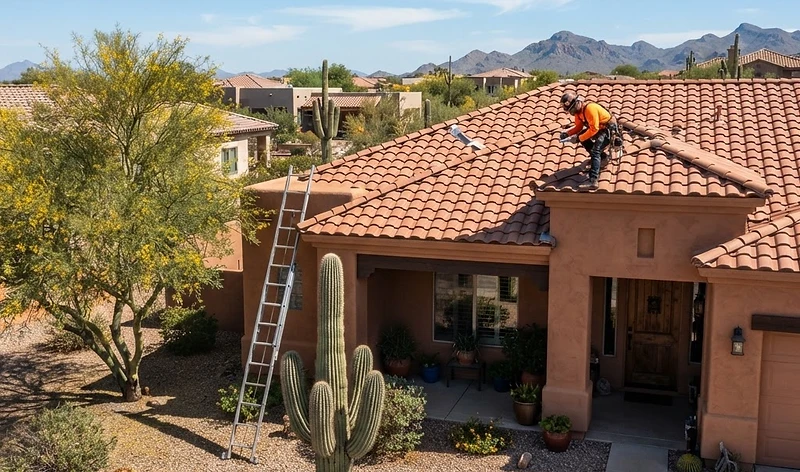
Roof Maintenance · Arizona
Annual Roof Maintenance in Arizona
Arizona heat, monsoon storms, wind, and sun can take a toll on your roof. Regular inspections and maintenance can help identify small problems before they become expensive repairs.
Free Roof Inspection
Start With a Look at the Actual Roof.
A roof maintenance plan should be built on facts, not a template. We inspect your roof, photograph what we see, and give you a clear picture of its condition — so you know what is fine, what needs attention, and what can wait.
Arizona Conditions
Why Roof Maintenance Matters in Arizona
Few climates work a roof as hard as Arizona's. Summer surface temperatures routinely climb well past what most roofing materials were designed around, and that extreme heat accelerates every other form of wear: asphalt shingles dry out and lose flexibility, underlayment ages faster beneath tile, and sealants around penetrations harden and pull back long before they would in a milder climate. The same sun that makes the Valley pleasant in January is relentlessly breaking down your roof in July.
UV exposure compounds the heat. Roofing materials fade, become brittle, and lose the surface characteristics that protect the layers underneath. On a shingle roof you may see granules collecting in the gutters; on tile and flat roofs, the protective coatings and underlayments do the quiet work of absorbing that punishment, and they are exactly the components you cannot see from the driveway.
Then come the monsoon storms. High winds lift and displace tiles, drive rain into places it normally never reaches, and send branches and debris across neighborhoods. Microbursts can damage a roof in minutes, and the damage is often subtle — a tile shifted a half inch, flashing lifted at a corner — which is why many homeowners never notice it until water shows up inside.
Dust and debris add their own pressure. Windblown grit accumulates in roof valleys and around penetrations, holds moisture against the surface, and speeds up deterioration right where water is supposed to drain away. Meanwhile, Arizona's dramatic temperature swings between day and night make roofing materials expand and contract daily, gradually loosening fasteners, cracking brittle sealants, and allowing tile to shift out of position over the years.
None of this means your roof is doomed. It means Arizona roofs age on their own schedule, and the conditions change slowly and invisibly until they don't. Routine maintenance and inspections exist to catch that progression early — while a tile can simply be reset, a sealant can simply be renewed, and a flashing detail can simply be corrected, instead of dealing with the interior damage that follows when they are left alone through another storm season.
What We Check
What Is Included in a Roof Maintenance Inspection?
Our inspections cover the roof as a system, not just the surface you can see. That starts with the roofing materials themselves: checking for broken or displaced tiles, damaged or missing shingles, and visible wear anywhere across the field of the roof. From there we move through the parts of the roof where problems actually start — the details.
Flashing and penetrations. Chimneys, vents, skylights, pipes, and anything else that interrupts the roof surface depends on flashing and sealant to keep water out. We inspect flashing condition, sealants, and the vent areas around every penetration, because these are the most common origins of Arizona roof leaks.
Drainage and debris. We look at how water leaves your roof — valleys, scuppers, and gutters where applicable — and note debris buildup that traps moisture or blocks flow. On flat and low-slope roofs, drainage condition is especially important before monsoon season.
Leaks and moisture signs. We check for visible leaks and the early signs of moisture intrusion, including staining or deterioration that suggests water is already finding its way in somewhere it shouldn't be.
Everything we find is documented with photos, and you get a straightforward readout of the roof's condition. If the inspection identifies something that needs hands-on work — resetting tiles, sealing penetrations, or a repair — we explain the options and costs clearly. Our maintenance visits are inspections first: we tell you what we see and what it means, and you decide what happens next.
Timing
How Often Should You Have Your Roof Inspected?
The honest answer is: it depends on your roof. Inspection frequency should account for the roof's age, the material it is made of, how exposed it is to weather, whether it has a history of repairs, and what the recent storm season has thrown at it. A newer shingle roof in a quiet neighborhood and a twenty-year-old tile roof on an open lot with monsoon exposure do not have the same needs.
That said, many Arizona homeowners settle into a rhythm of an annual roof inspection — often ahead of or right after monsoon season, when the year's weather damage is freshest and easiest to identify. An annual inspection builds a baseline: each visit documents the roof's condition, so changes between years are visible instead of invisible.
Two moments are always worth an extra look. First, after significant Arizona weather events — a strong monsoon, a microburst, a dust storm with high winds — even if everything looked fine from the ground. Second, whenever you notice signs of roof deterioration yourself: granules in the gutters, a tile that looks out of place, staining on a ceiling. Neither of those moments requires panic, but both are good reasons to have the roof looked at before a small issue gets a season to grow.
Warning Signs
Signs Your Roof May Need Maintenance
Roofs rarely fail without notice — they send signals first. These are the ones we see most often across Arizona homes:
- Missing or damaged shingles
- Cracked or displaced tiles
- Water stains on ceilings or walls
- Active roof leaks
- Damaged or lifted flashing
- Deteriorated sealant around penetrations
- Debris accumulating in valleys and drainage paths
- Visible wear around roof penetrations and vents
- Unexplained moisture or musty odors in the attic
Any one of these doesn't necessarily mean trouble — but each one is a reason to look closer. Some are cosmetic, some are urgent, and only an inspection can tell you which is which.
Not sure what condition your roof is in?
Schedule a free roof inspection and we'll show you photos of exactly what's happening up there.
The Difference
Roof Maintenance vs Roof Repair
Maintenance and repair are related but different jobs. Preventative maintenance is about the roof that is currently performing: inspecting it, documenting its condition, and addressing small developing issues — a tired sealant bead, a shifted tile, debris in a drainage path — before they become water in the house. The goal is to keep a working roof working.
Repair is about a problem that already exists. An active leak, storm damage, a section of shingles gone after a windstorm, or flashing that has failed — these need corrective work, not observation. The distinction matters because it changes the conversation: maintenance asks "what is wearing, and what should we watch or address now?" while repair asks "what failed, and what restores the roof?"
In practice, an inspection often lands somewhere in between — the roof is mostly healthy, but the visit identifies one or two items that genuinely need fixing. When that happens, we explain the available options and the reasoning behind each one, with photos and a written estimate for the work. You can see the kinds of corrective work we handle on our Arizona roof repair page, and if the inspection shows the roof is closer to the end of its service life than you'd like, roof replacement becomes the conversation instead.
Roof Longevity
Can Roof Maintenance Help Extend Roof Life?
Every roofing system has a service life set by its materials and installation, and no amount of maintenance makes an asphalt shingle roof last as long as tile. What maintenance can do is keep the roof on the healthier end of its own curve. Small roofing issues are self-accelerating: a lifted tile exposes underlayment to sun it was never meant to see, a cracked sealant lets water reach the deck, and debris trapped in a valley holds moisture against materials that are designed to shed it. Each of those small conditions, left alone, turns a localized problem into a spreading one.
Identifying and addressing those issues early may help prevent additional deterioration, which is another way of saying the roof spends its remaining life doing its job instead of slowly failing. That is the realistic, honest benefit: not a guaranteed number of extra years, but fewer avoided repairs, less interior risk, and better information about when a replacement truly becomes necessary.
It is also worth connecting maintenance to budget. The cheapest roof repairs are almost always the ones caught early, and a documented inspection history makes the eventual replacement conversation simpler and better-informed — you replace when the evidence says so, not when a surprise leak forces the decision at the worst possible time. For homeowners weighing the cost of major work down the road, our roof financing options can help spread that project over manageable payments.
By Roof Type
Roof Maintenance for Different Arizona Roofing Materials
Tile roofs. Tile is the signature Arizona roof for good reason — the tile itself is durable — but the system's weak point is what's underneath. Maintenance on a tile roof focuses on displaced or cracked tiles, the condition of the underlayment where it is visible, flashing at valleys and penetrations, and the ridge and hip details. Walking a tile roof correctly matters too: an inspection that breaks tiles solving someone else's problem helps nobody.
Asphalt shingle roofs. Shingle maintenance centers on surface condition: curling, cracking, missing shingles, granule loss, and how the material is aging relative to its expected service life in desert heat. Flashing and sealants around penetrations deserve close attention here as well, since deteriorated shingle sealant is one of the most common leak starting points we see.
Flat and low-slope roofs. Common on Arizona homes with patio and second-story sections, these roofs live and die by drainage and surface condition. Ponding water, blocked scuppers, split seams, and coating wear are the things to watch — especially before monsoon season, when a flat roof's flaws stop being theoretical. Where a coating system is appropriate, maintenance findings often inform whether a recoat makes sense.
The thread through all three: maintenance needs differ based on the roofing material and its condition, which is why a real inspection — on your actual roof — is the starting point rather than a one-size-fits-all checklist.
Service Areas
Arizona Roof Maintenance Areas We Serve
Outlaws Roofing provides roof maintenance and inspections across Arizona, with daily routes throughout the Phoenix metro. Whether you need roof maintenance in Phoenix, Scottsdale, Mesa, Chandler, Glendale, or Peoria, or you are further out in Avondale, Goodyear, or Surprise, the same free inspection and photo-documented process applies to your home.
Outside the Valley, we provide residential roof maintenance in Tucson and Yuma, where the same sun, storms, and heat that wear on Valley roofs work their own version of the problem. Browse the full list of communities on our Arizona locations page or the Arizona roofing page.
Why Outlaws
Why Choose Outlaws Roofing for Roof Maintenance?
Roof maintenance only works if the inspection behind it is honest. Ours starts free, is documented with photos, and ends with straightforward recommendations — including the recommendation to do nothing yet, when that is the truthful answer. And because we handle repairs and full replacements as well, the advice you get is not shaped by only one product to sell.
- Licensed, Bonded and Insured
- AZ ROC #365479
- Free roof inspections
- Arizona roofing experience
- Roof repair and replacement options when needed
- Straightforward recommendations
Ready to see where your roof stands? Request a free inspection above, browse our roofing services, or contact our team — we will show you the photos and give you the straight answer.
Outlaws Roofing Company LLC • AZ ROC #365479 • Licensed, Bonded & Insured
Roof Maintenance FAQs
Questions Arizona Homeowners Ask.
How often should a roof be inspected in Arizona?
There is no single schedule that fits every roof — the right interval depends on your roof's age, the material it is made of, how much sun and storm exposure it gets, and whether it has been repaired before. Many Arizona homeowners choose an annual roof inspection, and an extra look after a significant monsoon or windstorm is a sensible habit. If you are unsure what your roof needs, a free inspection is a good place to start.
What does roof maintenance include?
A roof maintenance inspection covers the visible condition of your roofing materials — looking for broken or displaced tiles, damaged shingles, and worn surfaces — along with flashing, roof penetrations, vent areas, sealants, and drainage. We also check for debris buildup, visible leaks, and signs of moisture intrusion, then walk you through what we found with photos.
How do I know if my roof needs maintenance or repair?
Maintenance is about catching small issues early; repair is about correcting a problem that already exists, like an active leak or storm damage. The inspection itself answers the question: if everything is holding up, the findings become your baseline for future checkups. If something has already failed, we explain the repair options and show you photos of the damage.
Should I have my roof inspected after a monsoon?
It is a reasonable idea. Monsoon storms bring wind, blowing debris, and driving rain that can lift tiles, strip shingles, and expose weak flashing — and some of that damage is not visible from the ground. An inspection after a significant storm can confirm whether the weather actually affected your roof or simply left it alone.
Can roof maintenance help prevent leaks?
It can help in a meaningful way. Many leaks start small — a deteriorated sealant bead, a cracked tile, a flashing detail that has pulled loose. Identifying those early and addressing them before the next storm removes some of the common entry points for water. No maintenance can promise a leak will never happen, but early attention reduces the risks that lead to one.
How much does roof maintenance cost in Arizona?
Pricing depends on the size of your roof, the roofing material, its current condition, how accessible the roof is, and the work required — so the honest answer comes from looking at your actual roof. Outlaws Roofing provides free roof inspections across Arizona, and any recommendations or estimates that follow are based on what the inspection actually finds.
Still have questions? Text us or call 602-962-1310 and talk to a real member of our Arizona team.
Know Where Your Roof Stands.
Free inspections, photo documentation, and straightforward recommendations — maintenance starts with the facts.